When did North ML ship Flare-1?
- p_search
- 0.91
- p_think
- 0.08
- decision
- search
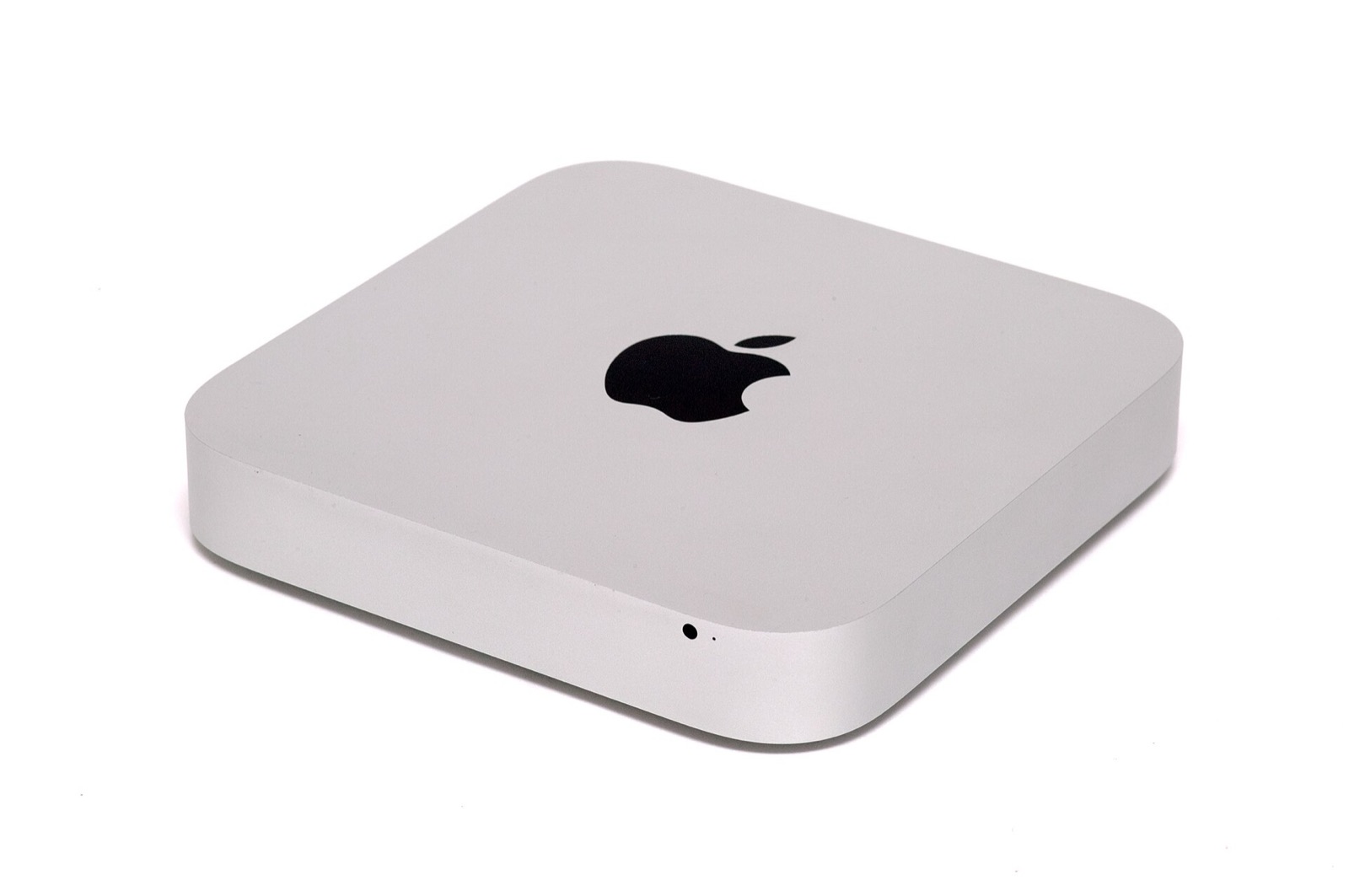
North ML builds compact open models that route, search, verify and act. Apache-2.0, and small enough to run on a 16 GB Mac mini.
No override. Router head decides: search.
A preview that runs in your browser. It applies the router's published overrides and real tools (math, time); the canned answers stand in for the model.
North ML is an independent research lab. We ship small open models and the stack around them: the retrieval, memory, verification and tools that make a 725M or 1.6B model useful, not just its weights.
Open weights first. Every model ships under Apache-2.0 on Hugging Face, many with GGUF builds. If we publish a number, you can download the thing that produced it and check it yourself.
Efficiency over scale. We aim for strong results per parameter and per dollar, not frontier-size clusters. The whole Flare-1 lineup is served from one Mac mini, and output costs 20 to 100 times less than frontier APIs.
Systems thinking. The model is one component. Routing, search, state and tools are the product. A small model that can look something up and check its claims closes most of the gap that raw parameters would.
Everything published. Including failures. When our 1M-parameter experiment showed no advantage over its baseline, we wrote it up anyway. Limitations sit next to results, in the same size type.
Our runtime is called Kestrel, after the falcon that holds still in the wind, looks, and only then commits. Every grounded answer does the same: it decides whether to look, reads what it finds, checks what it is about to say, and only then writes.
The API streams each stage as it happens: routing, searching, reading, thinking, writing. You watch the bird hover.
Edit the prompt. The request on the right is what you would send.
curl https://api.north-ml.space/v1/chat/completions \
  -H "Authorization: Bearer $NORTH_KEY" \
  -d '{
    "model": "fiber-1",
    "stream": true,
    "messages": [{"role": "user", "content": "…"}]
}'OpenAI-compatible /v1/chat/completions, /v1/models and /v1/completions. Streaming, let in by hand. Try the API
When did North ML ship Flare-1?
First it is routed: look it up, or just answer?
When did North ML ship Flare-1?
Then it searches and reranks what it finds.
When did North ML ship Flare-1?
Then Fiber-1 Pro checks every claim and number.
When did North ML ship Flare-1?
October 16–17, 2026: Ink-1, Fiber-1, Fiber-1 Pro and Flare-Preview.
2 sources
Only then does it write the answer.
One merged safetensors file per tier: backbone, trunk, router, bridge, tokenizer and runtime metadata, deployable on a 16 GB Mac mini.
24 layers: three gated DeltaNet layers, then one full GQA attention layer, repeated. Pruned and distilled from a larger Qwen3.5-style teacher.
DeltaNetGQA 8q / 2kvvocab 65,536
| Ink-1 | hidden 1024 | 565,222,208 |
| Fiber-1 | hidden 2048 | 1,413,111,616 |
AgentRegisters · after attention layers
Persistent memory slots after each full-attention layer. State survives across calls, snapshots and rollbacks. 295k parameters in Ink, 590k in Fiber.
A complete 24-layer transformer that shares the backbone's embeddings. It feeds the router, drafts tokens for speculative decoding, and holds associative memory.
Router head · 1,538 params
Override: code always thinks.
Override: small talk never searches.
A linear probe that decides whether to search and whether to think before answering. It gates the whole retrieval pipeline.
A learned linear projection from Starlight's hidden states into the Fiber trunk's width, so the two halves can read each other.
2048→768
Fiber-1 · 3.15M params
1024→768
Ink-1 · 1.57M params
Era · snapshots
A lossless state manager: snapshot and roll back the KV cache, DeltaNet states, registers and memory. Exact rollback is what makes speculative decoding safe.
| Benchmark | Ink-1 725M | Fiber-1 1.63B |
|---|---|---|
| ARC-Challenge 1,165 q | 63.6% | 73.5% |
| MMLU 280 q subset | 39.3% | 48.9% |
| HumanEval 164 | 18.3% | 37.2% |
| GSM8K 300 q | 40.3% | unstable, flagged |
Held-out reliability eval: chat, identity, grounding, follow-up, pushback, reasoning, code.
starlight-miniOur first public release.
startWind ArcFirst GGUF distribution, for llama.cpp and friends.
GGUFWind EdgeSmaller sibling, also shipped as GGUF.
GGUFWillowArchitecture experiment.
researchNectarArchitecture experiment.
researchCurriculumTraining-order experiment.
researchForge-1Training experiment.
researchAurora OneOur strongest early release.
452 downloadsAurora ProeliaThinking variant of Aurora.
thinkingEmber-ArdentThinking variant.
thinkingTiny-DGMA micro model.
microVortex AlphaA 175M research model.
175MStarlight Small and ProThe backbones Flare-1 is built on.
1.1k downloadsInk-1~725M. Starlight Small with the Kestrel base.
Apache-2.0Fiber-1~1.63B. Starlight Pro with the Kestrel base.
Apache-2.0Fiber-1 ProAdds online GRPO and a neural fact-verification pass.
Apache-2.0Flare-PreviewArchitecture preview and the 1M proof of concept, negative results included.
preview35+ public releases and 2,300+ downloads on Hugging Face so far.
The research workspace, on Ink 1, Fiber 1 Lite, Fiber 1 Pro and Mix (Fiber 1 Pro plans the research, then writes and checks the answer). It searches the live web, shows the sources it kept and dropped, and cites them.
Included with every accountOpenAI-compatible, streaming chat completions with a dashboard, keys and usage logs. north-auto routes each request to Ink-1 or Fiber-1.
Invite onlyAn autonomous coding app: execution-verified synthesis, Python execution, tool calls and a self-repair loop.
Invite onlyInk-1, Fiber-1 and Fiber-1 Pro as safetensors, many earlier models as GGUF. Download, run, fine-tune.
PublicThe weights are on Hugging Face and the papers are here, including what didn't work. Or use north-auto through the API.
